
Orchard Manor School, Dawlish
Special School with residential provision
220 students aged 4-19
Providing education for pupils with communication and interaction difficulties, Autistic spectrum conditions and learning needs.
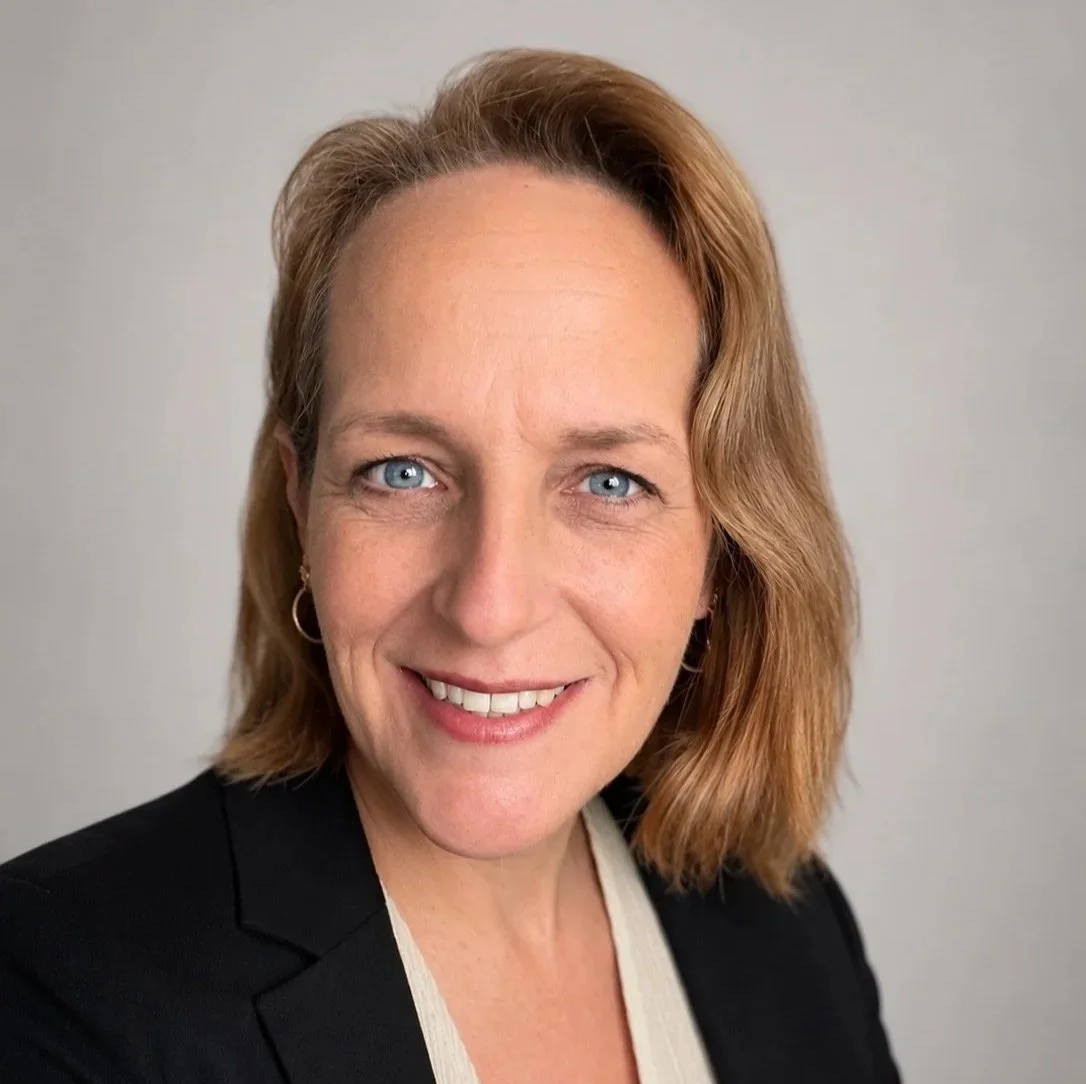
I’m Samantha Hill, Assistant Headteacher at Orchard Manor School, where I work with children whose primary need is communication and interaction. We support pupils from EYFS to Post‑16 through three tailored pathways: ‘Explore’, for learners needing a sensory‑rich, communication‑focused environment; ‘Discovery’, which blends sensory, social, and academic learning; and ‘Investigate’, which offers a more academic curriculum while still prioritising communication development.
Across all pathways, we are seeing more children who struggle to process speech, and we continually adapt our teaching to ensure they receive a high‑quality, meaningful education that prepares them for independence. Yet early reading remains heavily tied to spoken responses, and current government systems do not recognise non‑verbal reading in the early stages.
By adapting our phonics teaching, we discovered that many children could read — they simply couldn’t show it orally. This led us to begin a campaign calling for national recognition of non‑verbal pathways to reading and for an expectation that all schools teach every child to read, regardless of how they communicate.
Why Every Child Deserves the Right to Read: Rethinking Phonics for Non‑ and Pre‑Verbal Learners
Samantha Hill, Assistant Headteacher, Orchard Manor School
In our school, many of our children communicate in ways that don’t rely on spoken language. They may be non‑verbal, pre‑verbal, or developing speech at their own pace. Yet every single one of them has the right to learn to read. And reading, crucially, is not dependent on speech.
To make phonics meaningful and accessible for our learners, we’ve adapted our teaching, supported by Read Write Inc. so that it remains purposeful, relevant, and successful for children who communicate differently. Instead of relying on oral responses, we use approaches such as “show me the sound/word”, offering three options and asking the child to select the correct one. We continue to model the oracy element by saying the sound or word aloud, ensuring they hear it even if they cannot yet say it.
We also integrate AAC devices so students can tell us what they are reading using their own communication systems. As they progress into storybook reading, we model fluent reading and provide scaffolds such as widget-supported sentences and word cards. This allows students to build sentences, demonstrate comprehension, and show that they can read and order words accurately, without needing to speak.
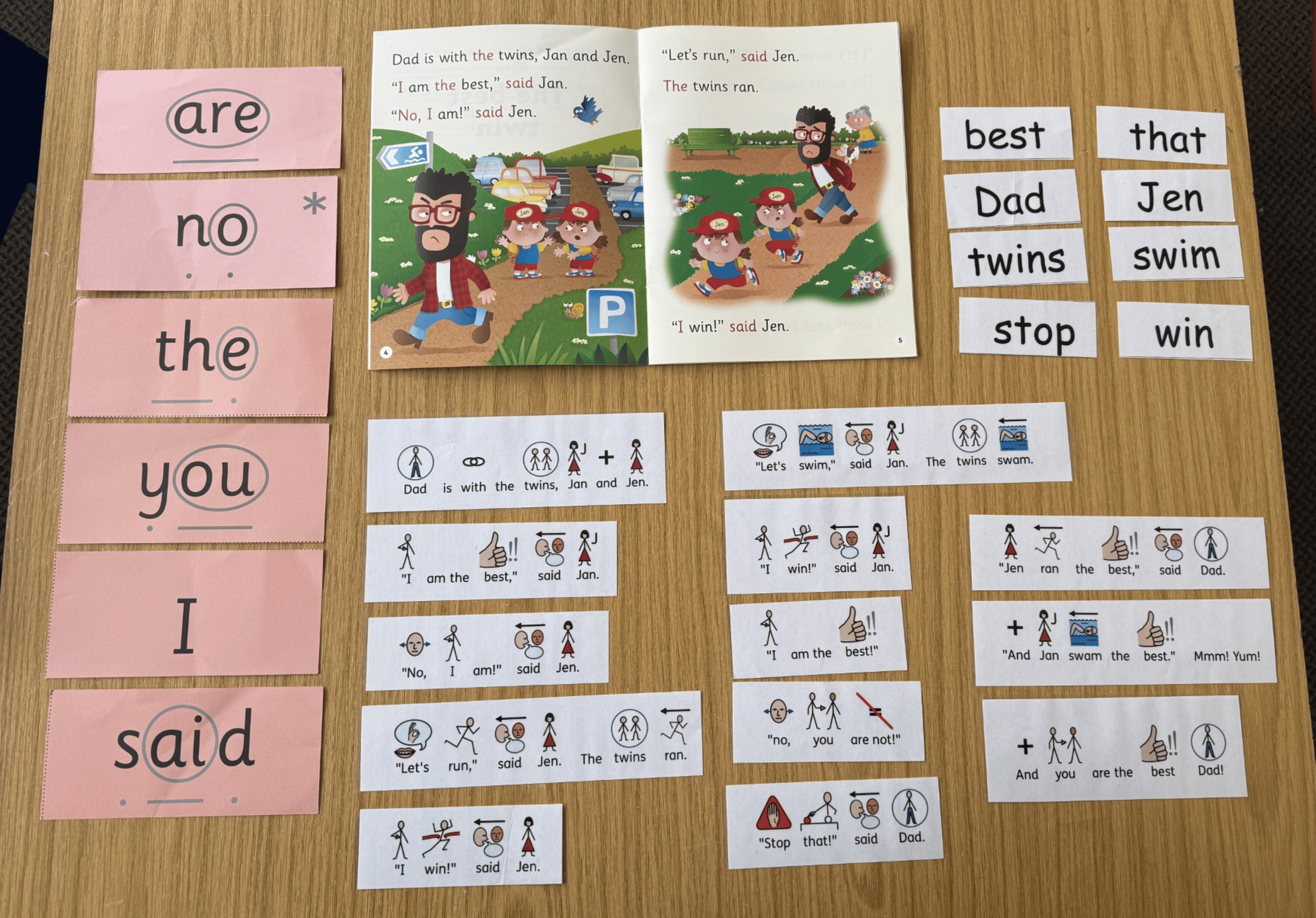
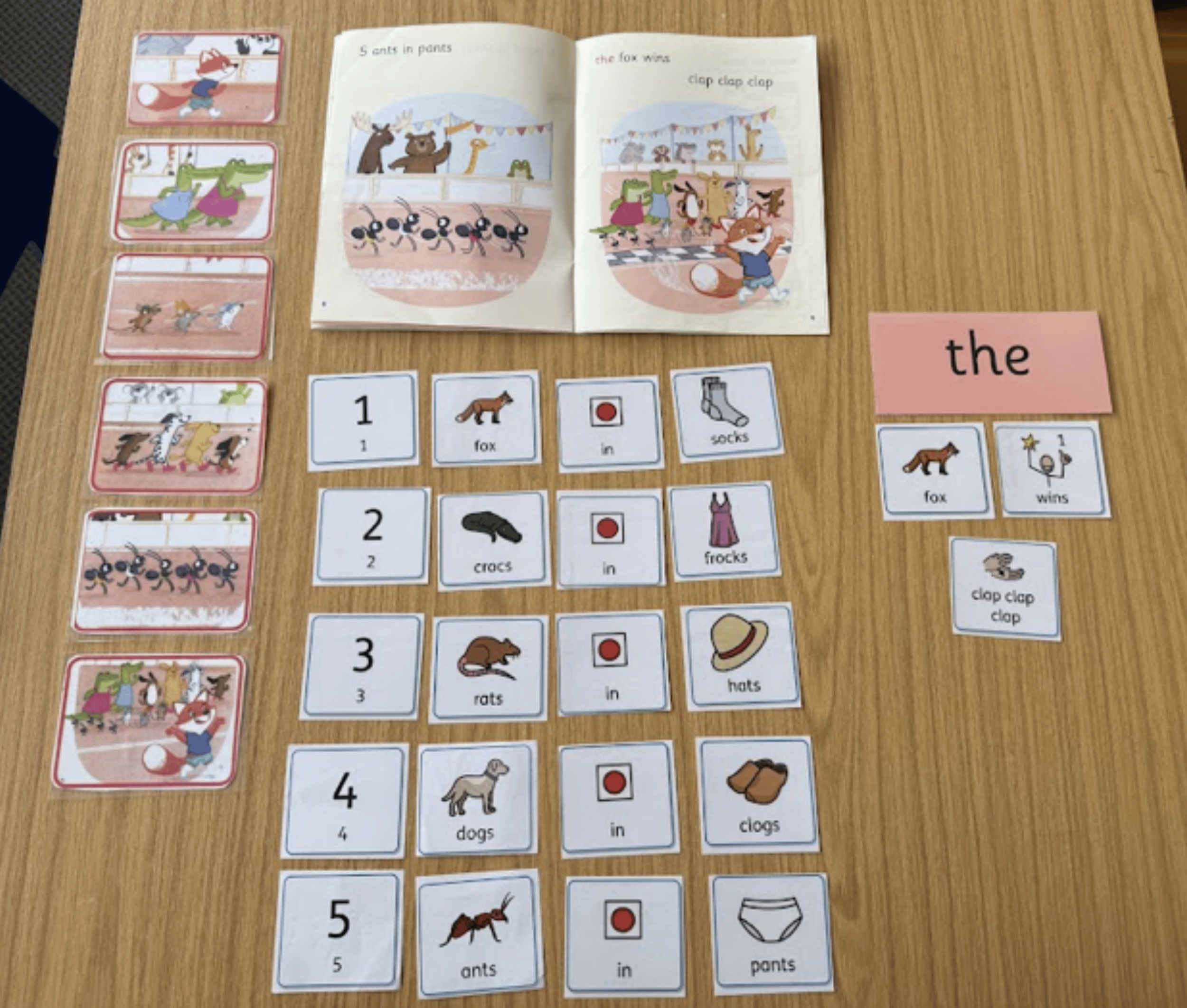
Read Write Inc Storybook Resources
When it comes to the Phonics Screening Check, we apply the same principles. For every word, including alien words, we create three options. We say the word twice, and the student selects the correct match. It is a valid, reliable demonstration of reading. Yet when we attempted to submit these results, we were told the students must be disapplied because the assessment requires spoken responses.
This assumes that reading and speaking are synonymous. They are not. They are two entirely different skill sets.
Too often, when visiting prospective students for our SEND school, I hear that a child is,
“not yet accessing phonics because they are non‑verbal.”
By disapplying these children from the Phonics Screening Check, the government unintentionally, reinforces this misconception. It sends the message that if a child cannot speak, they do not need to learn to read.
But children without a spoken voice must find their voice in other ways; AAC, writing, eye gaze, signing. Every one of these communication methods relies on an understanding of letters and sounds. If we do not teach them to read, segment, and blend, we are stripping them of their alternative voice.
Our goal is for every student to become as independent as possible in adulthood. Independence requires literacy. Reading enables them to communicate their needs, follow instructions, navigate recipes, shop, engage with employers, understand health information - the list is endless. Literacy is not optional; it is foundational.
By adapting the Phonics Screening Check, we are setting a standard of expectation: every child has the right to read, every educator has the responsibility to teach, and every learner’s progress deserves to be recognised.
It is not about the final score. It is about valuing and respecting their right to communicate independently.
We have students who do not yet speak and still achieve the equivalent of 38/40 on an adapted PSC. They demonstrate their knowledge, just in a different way. One child in particular was non‑verbal during his PSC year and should have passed, but was disapplied. A year later, he developed speech and is now reading chapter books, writing in full sentences, and communicating in multiple ways. Had we waited for speech before teaching him to read, he would still be learning basic Set 1 sounds today.
Imagine someone placing tape across your mouth, preventing you from speaking. Could you still read?
Our children can too. And they deserve the chance.
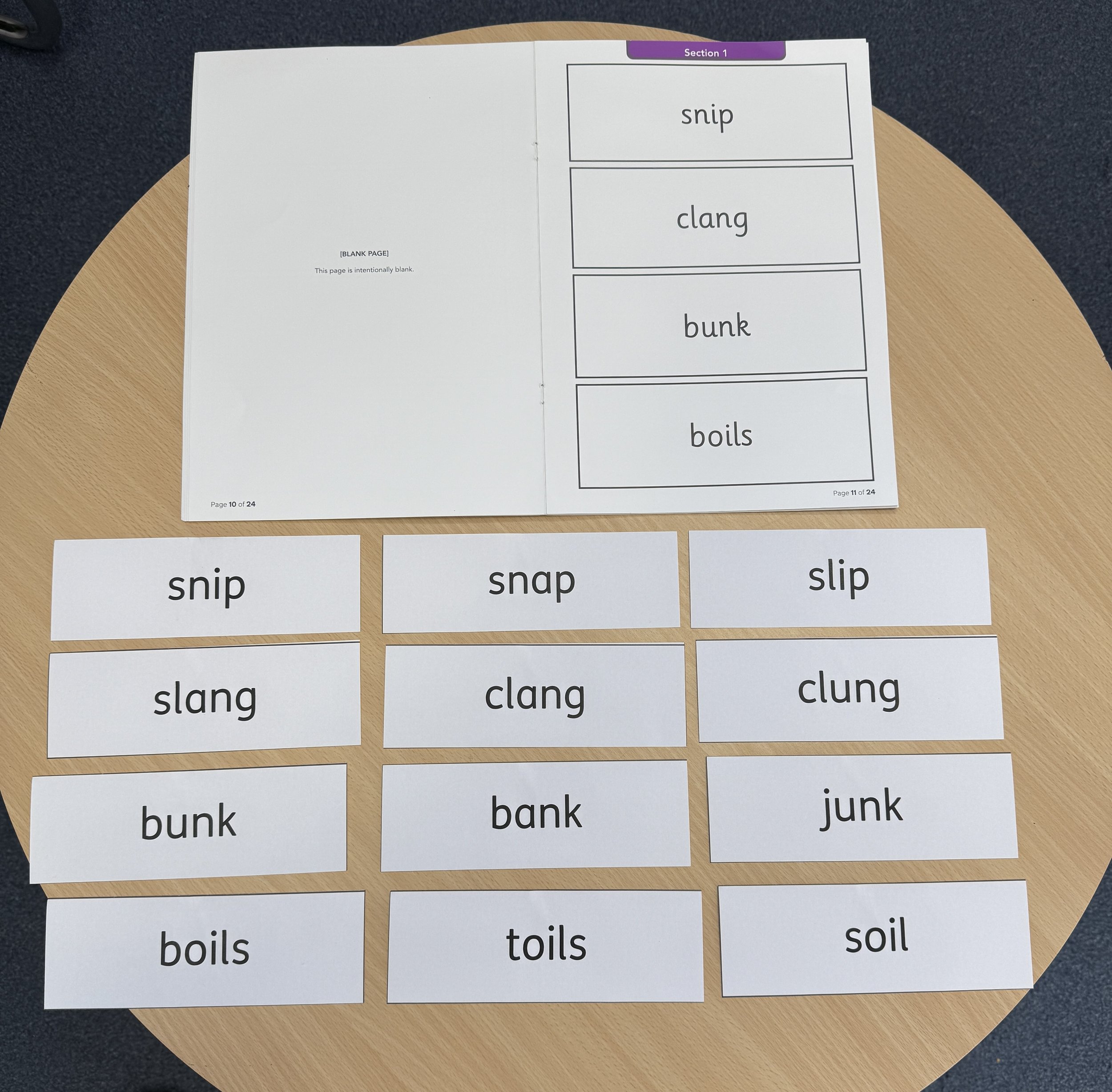
Phonics Screening Check - Real Words
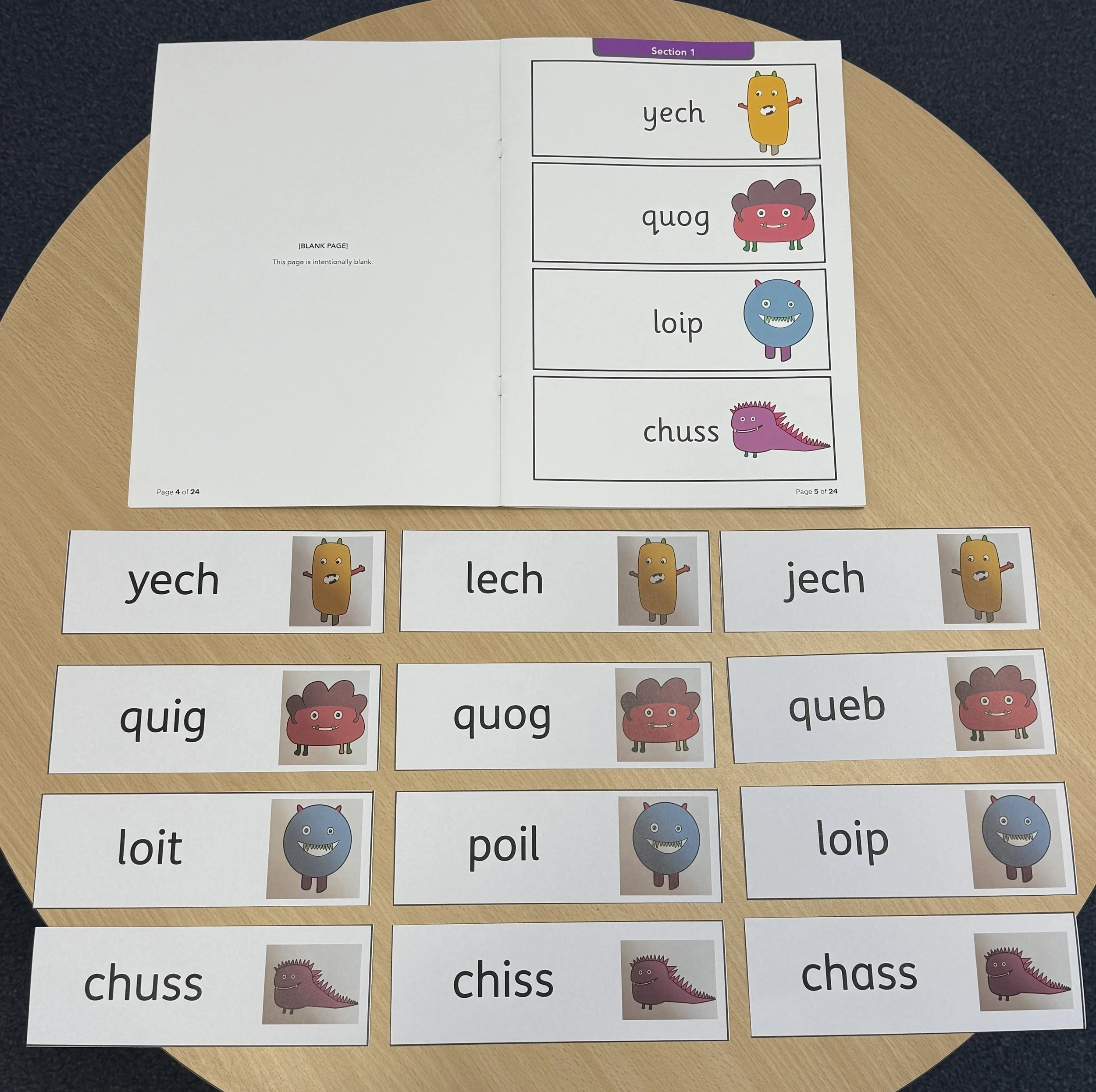
Phonics Screening Check - Alien Words
Watch the adapted Phonics Reading Check in action