
For professionals
On-demand training & workshops
Access Teach Us Too training whenever it suits you. Our on-demand library includes recordings of many live workshops delivered throughout the academic year, giving professionals the opportunity to catch up on learning in their own time.
Please keep an eye on this section of our website, follow our social media channels for announcements of further training opportunities and join our mailing list, to be the first to hear about them.
Browse our current on-demand training menu below.

Teacher
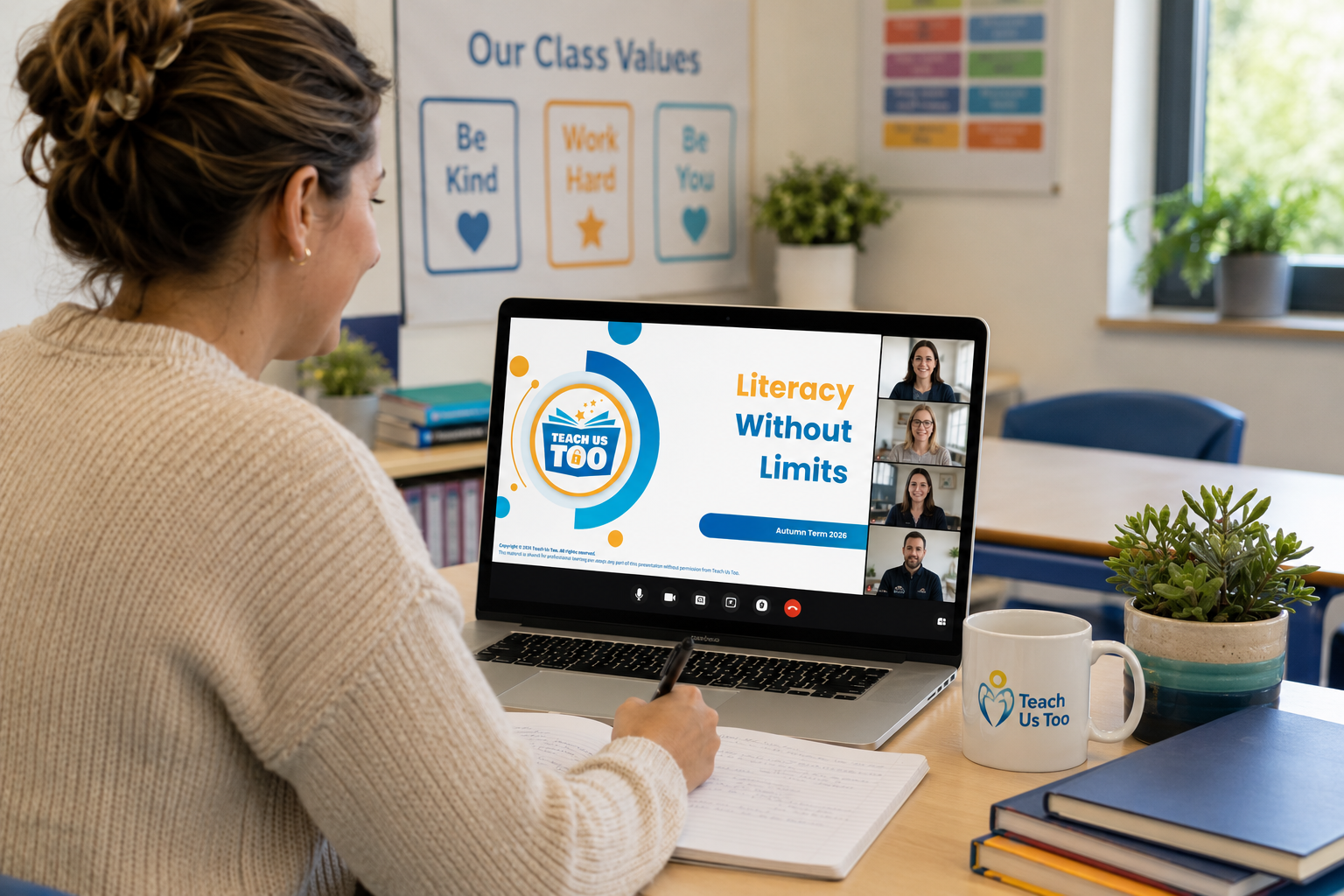
I thought the course was very interesting. Doing it online on demand, I paused it and listened in 2 sections.
On-Demand Training Disclaimer
Our on-demand training is intended for individual, personal use only. Access to recordings and materials does not permit use for wider distribution, including (but not limited to) sharing with groups, presenting to audiences, or incorporating the content into your own training or consultancy work.
If you would like to use this training within your school or setting to support wider CPD, please contact Teach Us Too to discuss appropriate access options.
On-demand menu
This workshop is designed to help you develop a deeper understanding of access for learners with complex needs, with a particular focus on communication and literacy. Whether you are an educator, therapist, support worker, or parent, you’ll gain practical strategies, real-world examples, and a strong foundation in AAC approaches to support individuals in expressing themselves and developing their literacy skills.
This practical training session explores the relationship between CVI and literacy, helping educators understand the barriers that can prevent pupils from engaging successfully with reading and written materials. Participants will gain a better understanding of CVI, including key medical and ophthalmic terminology, and consider how assessment can help determine print accessibility.
This workshop will give an introduction to a language acquisition style commonly seen in neurodivergent children (including autistic children, children with ADHD, and those with other developmental differences), known as Gestalt Language Processing (GLP). We will explore how Gestalt Language Processing differs from more traditionally described analytic language development, and what this means for how we understand, support, and respond to children’s communication.