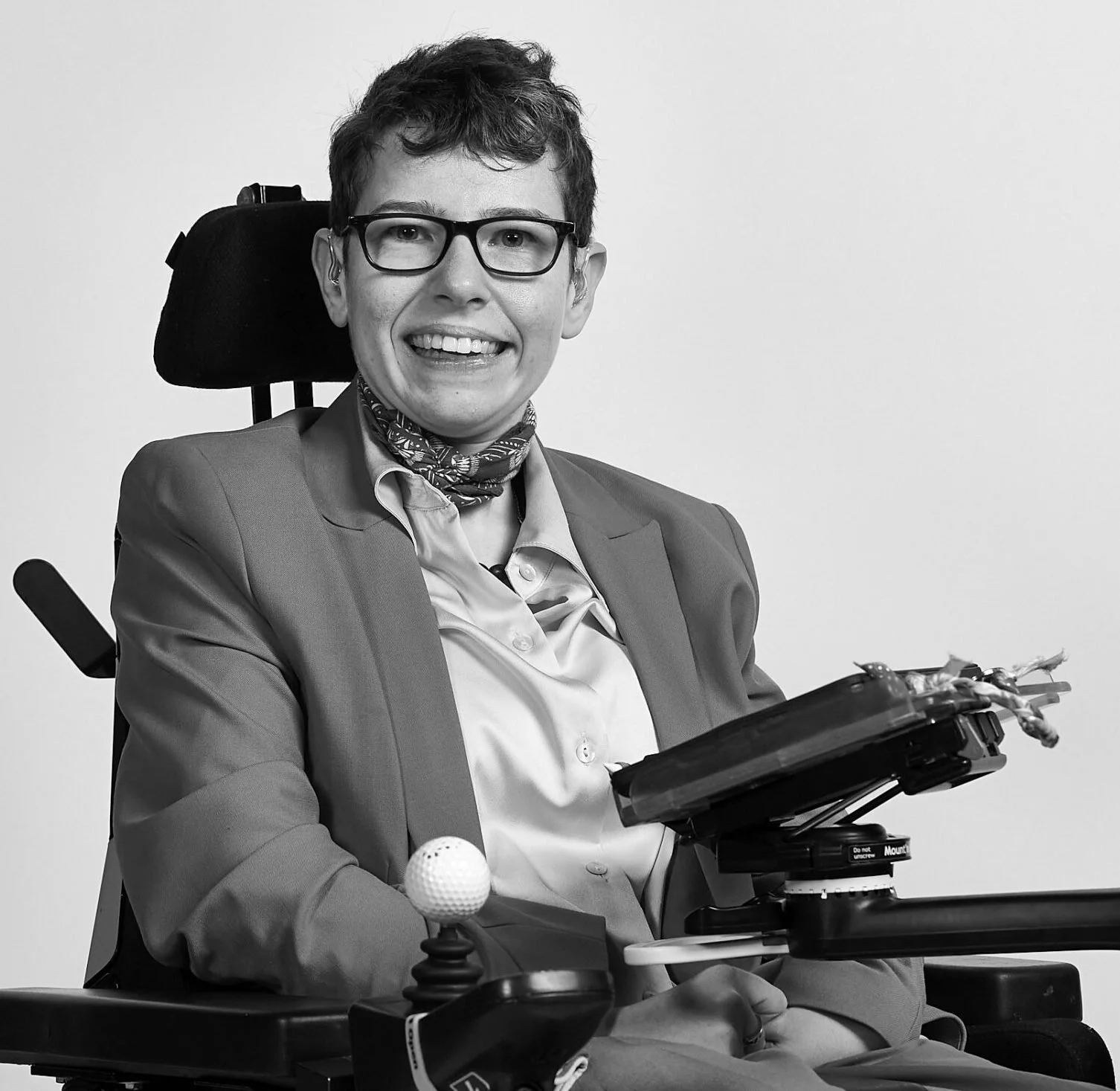
Beth Moulam
Advocate and Paralympian
We are proud to welcome Beth Moulam as an ambassador for Teach Us Too.
Beth brings both lived experience and professional insight to the movement for inclusive literacy. As an AAC user from a young age, she understands first-hand how access to literacy, high expectations, and supportive teaching can open doors to communication, education, and independence.
Beth is a passionate advocate for ensuring that all children who communicate differently are taught to read and write so they can express their ideas, participate fully in learning, and shape their own futures. Her belief that literacy is fundamental to communication and opportunity closely aligns with the mission of Teach Us Too.
I was 4 when I got my first augmentative and alternative communication (AAC) device. Ever since, I have been passionate that every child should be heard, listened to and understood. With time I realised AAC is for life and my dream has extended to supporting all AAC users in fulfilling their own communication and life potential.
In my teens I came to recognised my privilege; I had been identified early as needing communication support. My first assessment, aged 3, meant I received AAC to begin mainstream primary school along with a dedicated computer in the classroom. In 1998 AAC was new, no-one knew anything much about any technology, the school secretary received the school’s first computer at the same time I did! I was already reading when I began school so apart from an initial blip when the reception teacher assumed I could not read from then on I was taught with the same high expectations alongside my peers by teachers who presumed my competence.
I believe the greatest gift I received, both at home then in primary school, was literacy. The ability to read, write, speak and listen empowers all learners and for the AAC user literacy opens the door to fulfilling our potential in education, at home, in the community and the world of work. Being literate doesn’t make using AAC easy, but when we can express our wishes, hopes, dreams and opinions without censure we can self-advocate, take control within our own lives and contribute to society.
I left mainstream secondary school for a special school placement, aged 13, after teachers felt technology gave me an unfair advantage yet at the same time stating I was unlikely to achieve any qualifications. Literacy and digital technology have opened up the world for those with disabilities, what needs now to happen is for the multi-disciplinary children’s workforce and families to believe that literacy is for every child.
My policy and research university studies and experiences have reinforced the value of evidence informed approaches to learning and the importance of sharing applied research to challenge and influence policy and decision makers, as well as professional practice.
Teach Us Too’s mission dovetails with my desire to ensure every child is taught to read and write in order to access the curriculum and fulfil their own communication potential.