
St Leonard’s C of E Primary School, Lancashire
Mainstream primary school with SEND Unit.
Two dedicated SEND Units that provide tailored support for pupils of primary school age with Speech, Language and Communication Needs (SLCN).
St. Leonard’s C of E Primary School are proud to have two dedicated SEND Units that provide tailored support for pupils of primary school age with Speech, Language and Communication Needs (SLCN.) These units offer a nurturing, inclusive environment providing personalised curricular allowing every child the opportunity to thrive academically, socially and emotionally. The SEND Unit is designed with the intent that children will access parts of the mainstream day (no more than 50%) whilst also receiving smaller class sizes and a higher adult to child ratio. The two SEND Unit classes are called Apple Blossom and Cherry Blossom and have a maximum of 8 children within each class.
I came to special education teaching after 13 years in the Early Years Foundation Stage and, naively, assumed that my knowledge of early reading and early writing would stand me in good stead for teaching literacy within the SEN Unit. Though it has been a helpful background, I was soon to learn that my new children’s experience of literacy was anything but linear, predictable and (obvious in hindsight) neurotypical. It was, in fact, a nuanced, complex, joyful and entirely individual experience, with each child developing differently, accessing differently, and taking different things from their love of literacy.
A Journey into SEN Literacy
Dulcinea Norton, Special Education Teacher, St Leonard’s School, SEND Unit
Our Classroom Context
I teach in a SEN Unit for children with Social Communication needs. All of my current cohort have a diagnosis of autism. The majority of them are non-verbal. They are all boys. My current cohort ranges from Reception Class to Year 4 and they are all working on a semi-formal curriculum. Some will move on to a formal curriculum and our more formal classroom. Most will remain in my semi-formal classroom as this better suits their learning style and needs.
We have a Total Communication Environment which is an approach that uses multiple methods, such as speech, sign language, gestures, visuals, and written text to support effective and accessible communication for all individuals.
I say that the majority of the children in class are non-verbal, but that does not mean quiet. Though many of the children largely communicate without using spoken words we have a noisy classroom. Most of the children communicate using facial expressions, gestures, body movements, eye gaze, sounds, communication aids, vocalisations, or spoken patterns like echolalia, scripting, Gestalt Language Processing (a style of language development that builds meaning from whole phrases rather than single words) and a LOT of singing. All of this creates an interesting experience of literacy.
Rethinking My Approach to Teaching
When I started my role in the SEN Unit I came with my years of mainstream experience - long picture books during carpet time (including questions about the book), children accessing traditional phonics approaches, activities based on shared understanding and independence, and quick, straightforward assessments – completed in record times. In reality, this meant I arrived with a huge toolkit of experience which was, at first, entirely useless.
For a while it left me feeling like I had taken on more than I could handle. I approached teaching and assessment in an adapted, but levelled-down way, and ultimately failed - time and time again. I then realised that the children were not going to change their learning styles, so I would have to change my approach. That shift was both daunting and liberating.
Following the Child
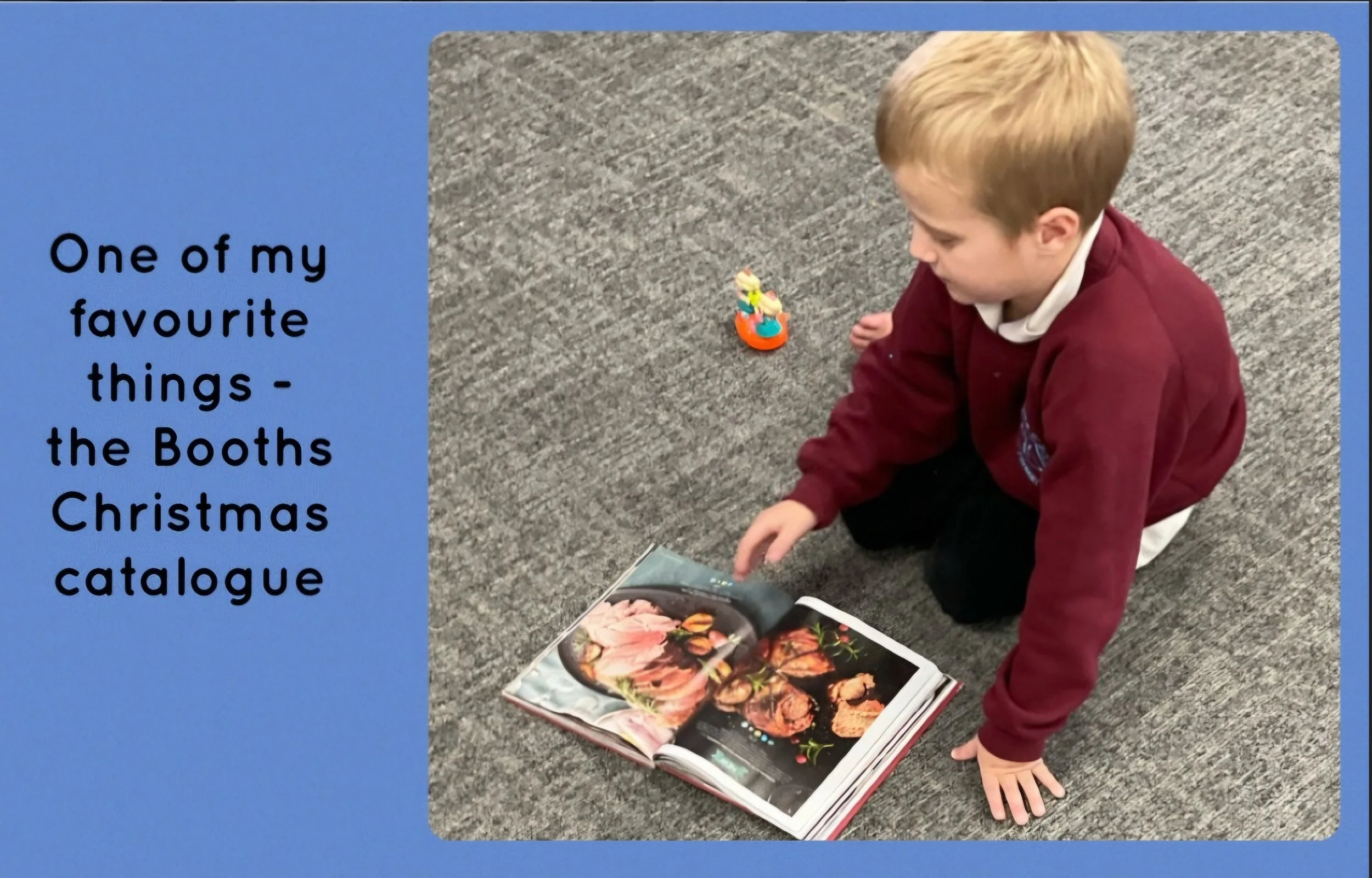
My children do not automatically access learning just because an adult asks them to. If they are not interested, they will not engage. They are not motivated by social expectation or a desire to please; instead, they are driven by joy, regulation, sensory needs, and personal interests. What these children need is connection – not an expectation of compliance. This meant letting go of traditional expectations and embracing their individual worlds and motivations. What followed was a shared learning journey. One that continues to teach all of us, especially the adults, something new every day.
What Literacy Looks Like in Our Classroom
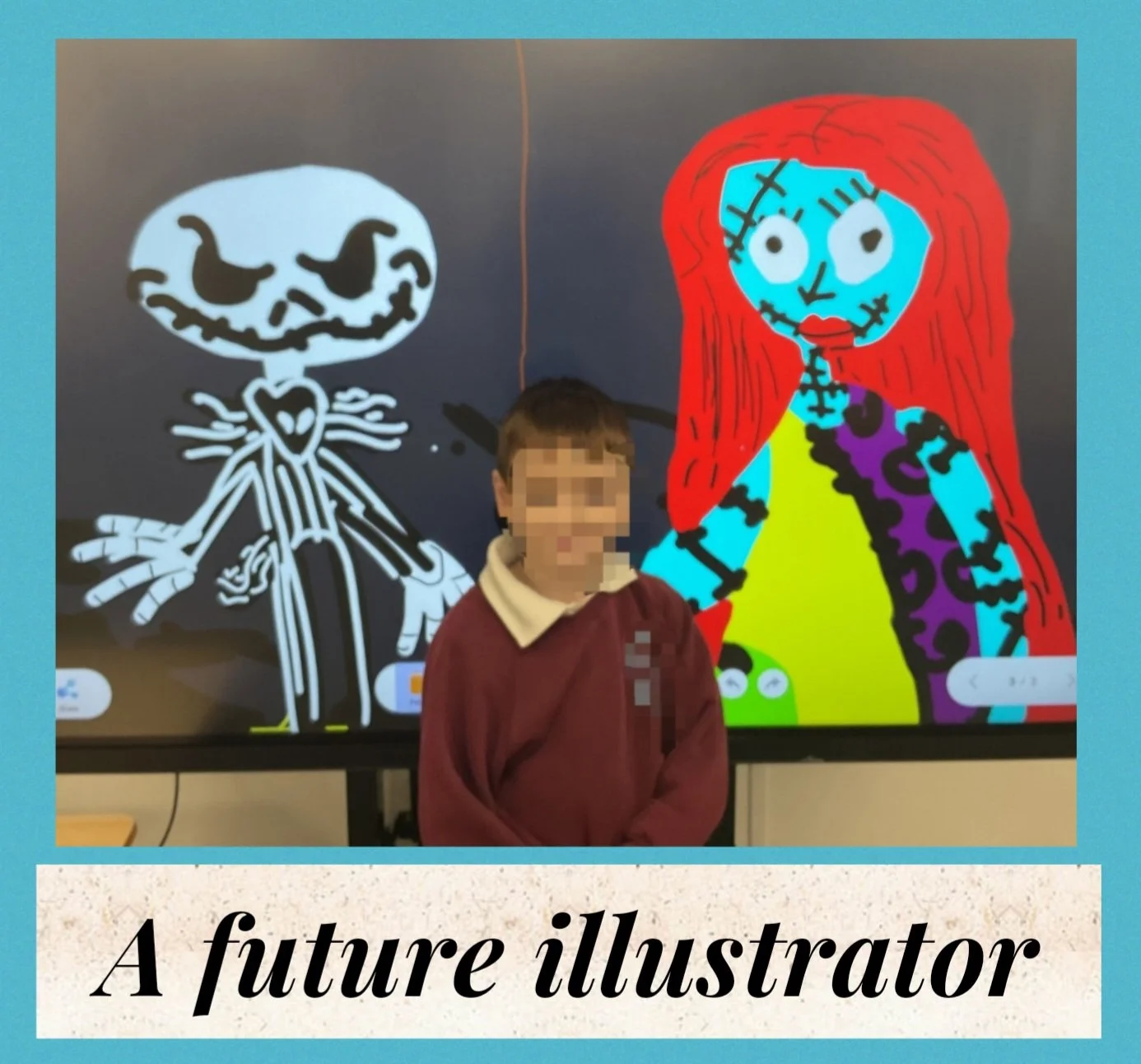
For the children in my class, literacy can mean one hundred different things, and each version is deeply personal.
Click on the images below to read more about these pupils.
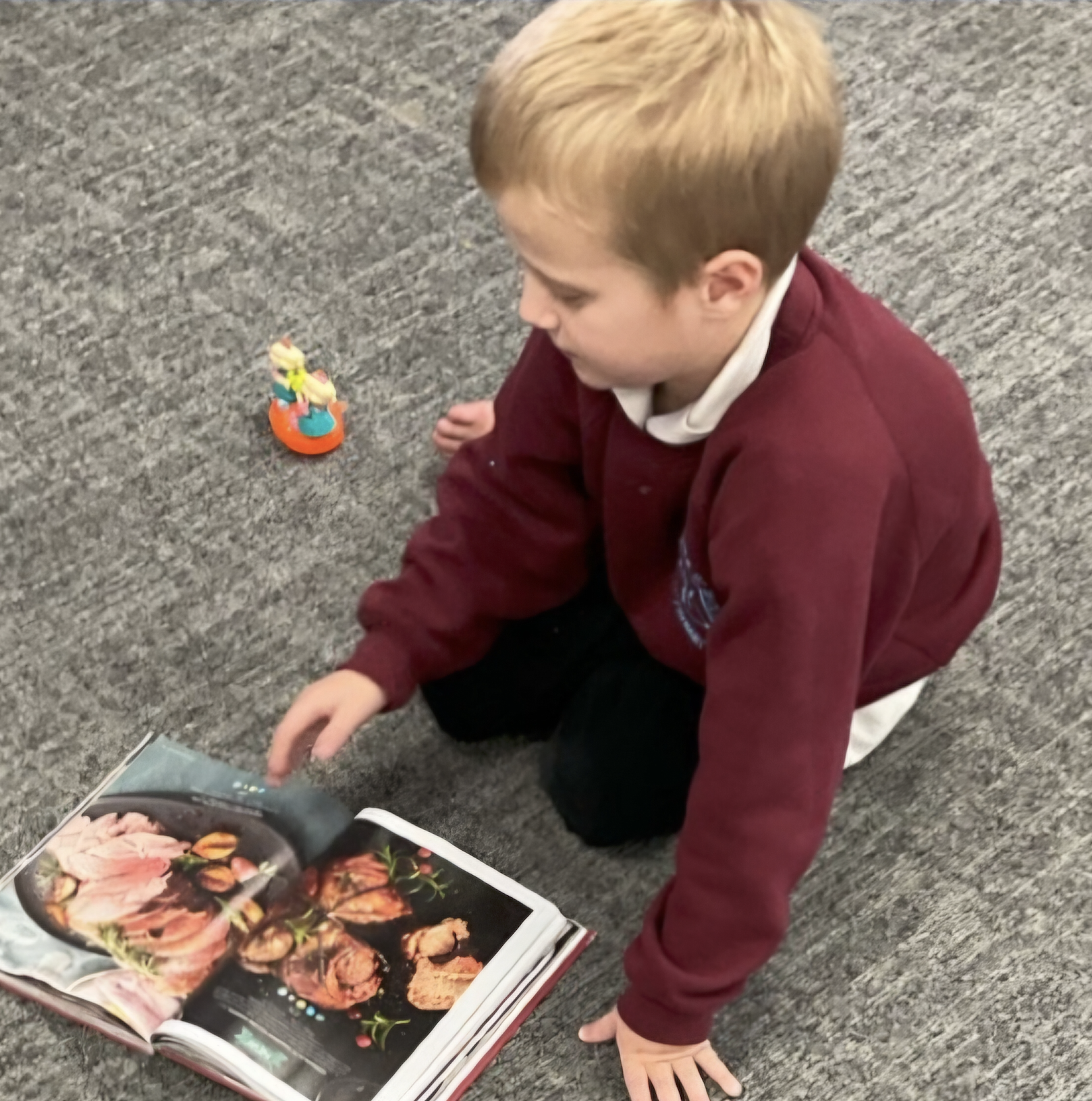
Max
A Sensory Explorer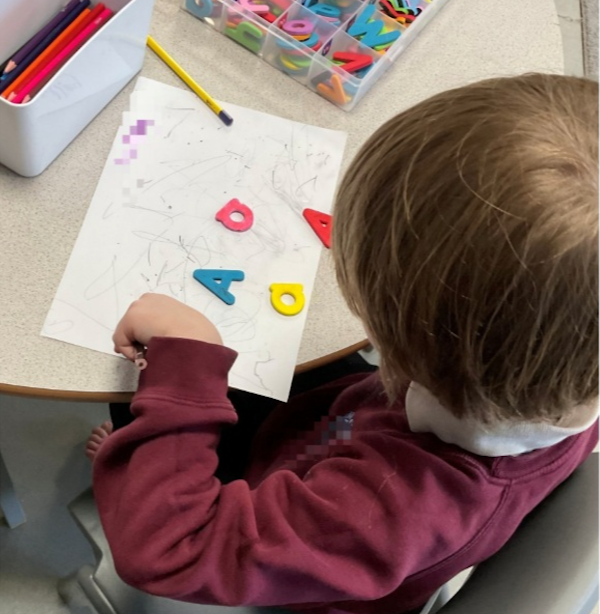
Bradley
Literacy Through Movement & Play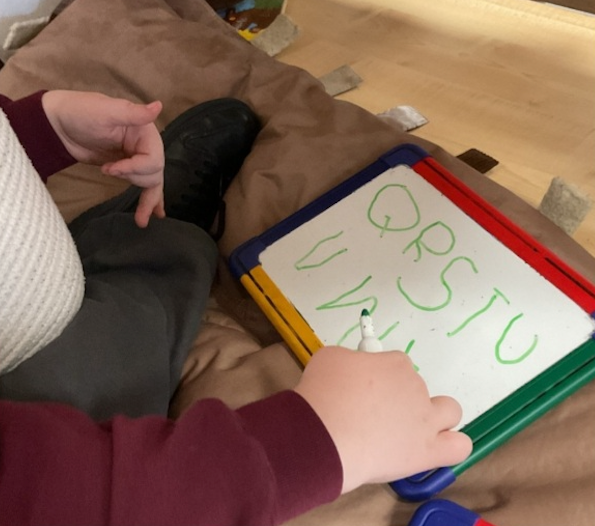
Literacy as a Gateway to LanguageOliver
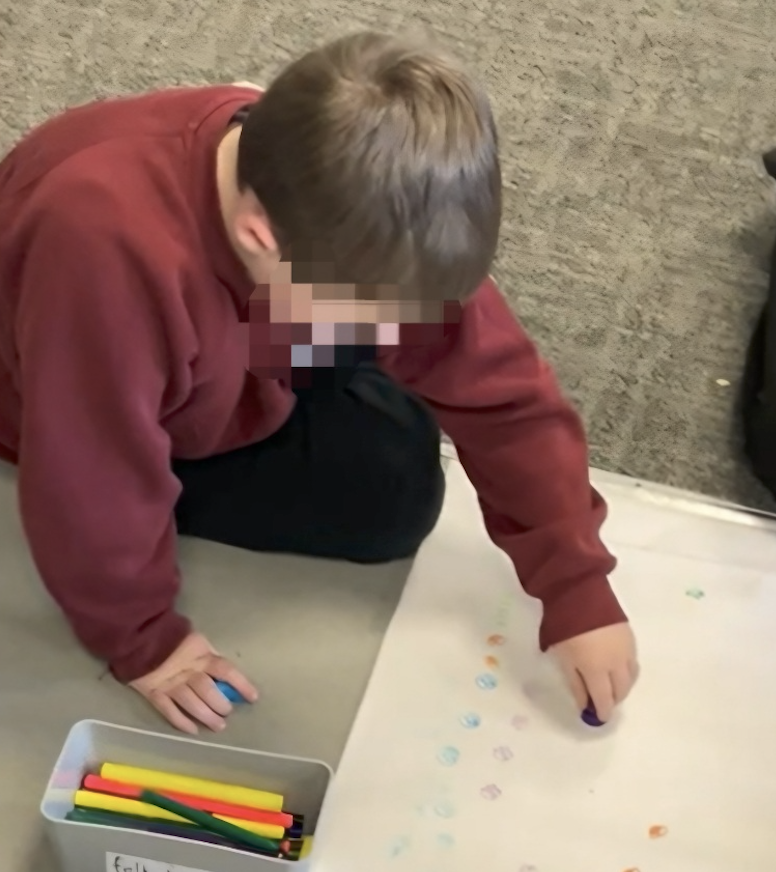
Jude
Literacy Through Music & Expression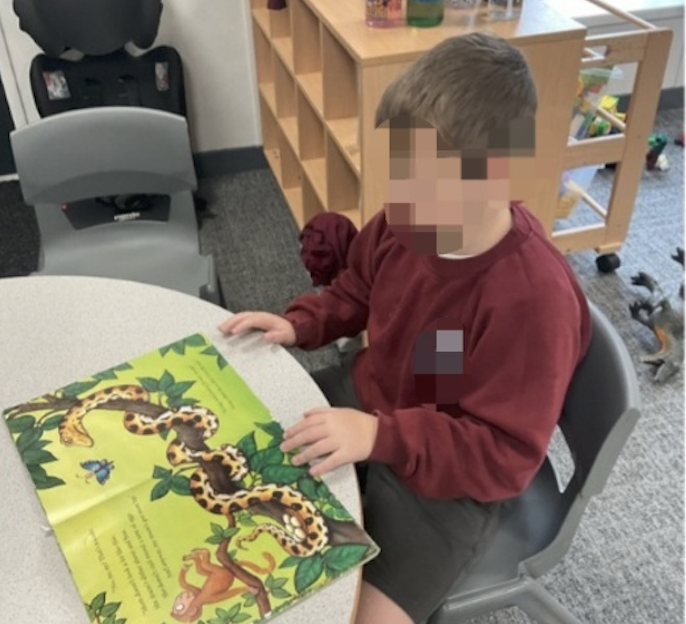
Arlo
A More Typical Literacy PathwayRecognising Literacy in Different Forms
In our classroom, literacy is not limited to reading and writing in the traditional sense. It can be seen in many ways, including:
Reading environmental print and recognising logos
Engaging with songs, rhythm, and rhyme
Responding emotionally or physically to stories and songs
Understanding visual supports such as timetables and symbols
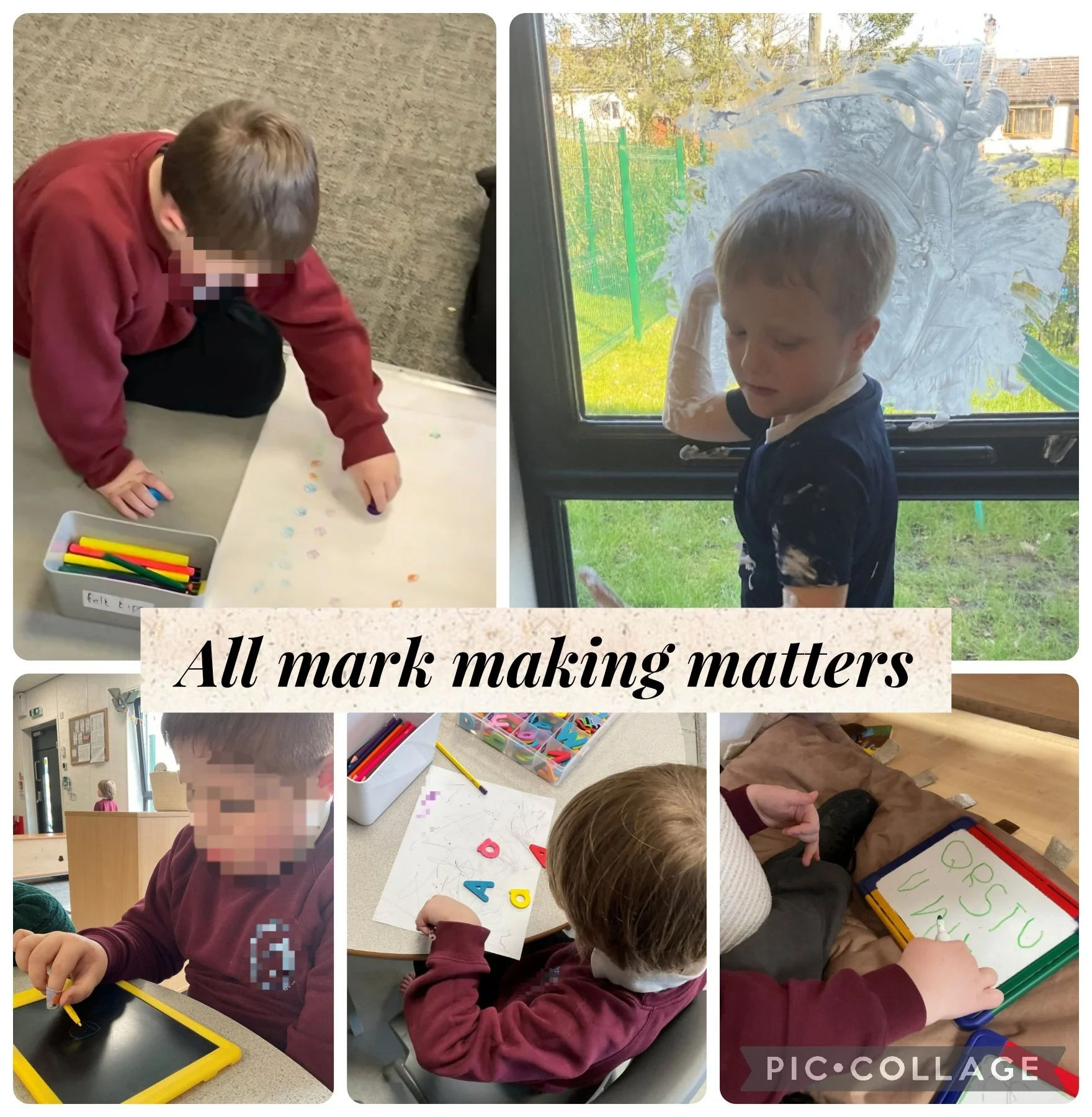
Exploring mark making and early writing
Demonstrating knowledge of how books work
Following sequences and patterns
Showing preference and familiarity linked to routine and print (or distress when a visual routine is not followed)
Role play with a friend or solo role play
Enjoying looking at words relating to special interests
Exploring books, catalogues and paper from a sensory point of view
Finger painting
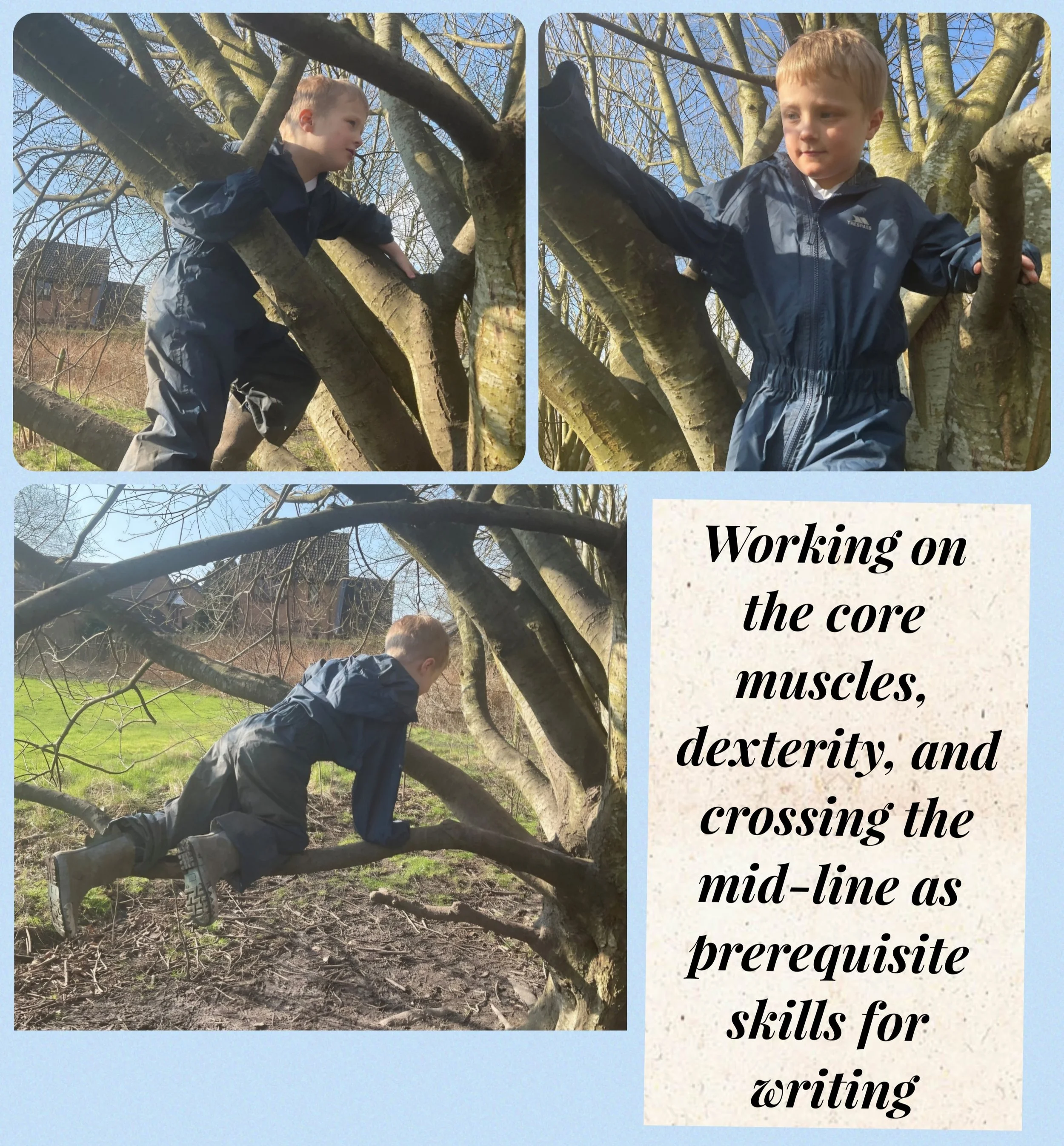
Finger gym activities
Communication boards and visuals
Evolving Our Approach
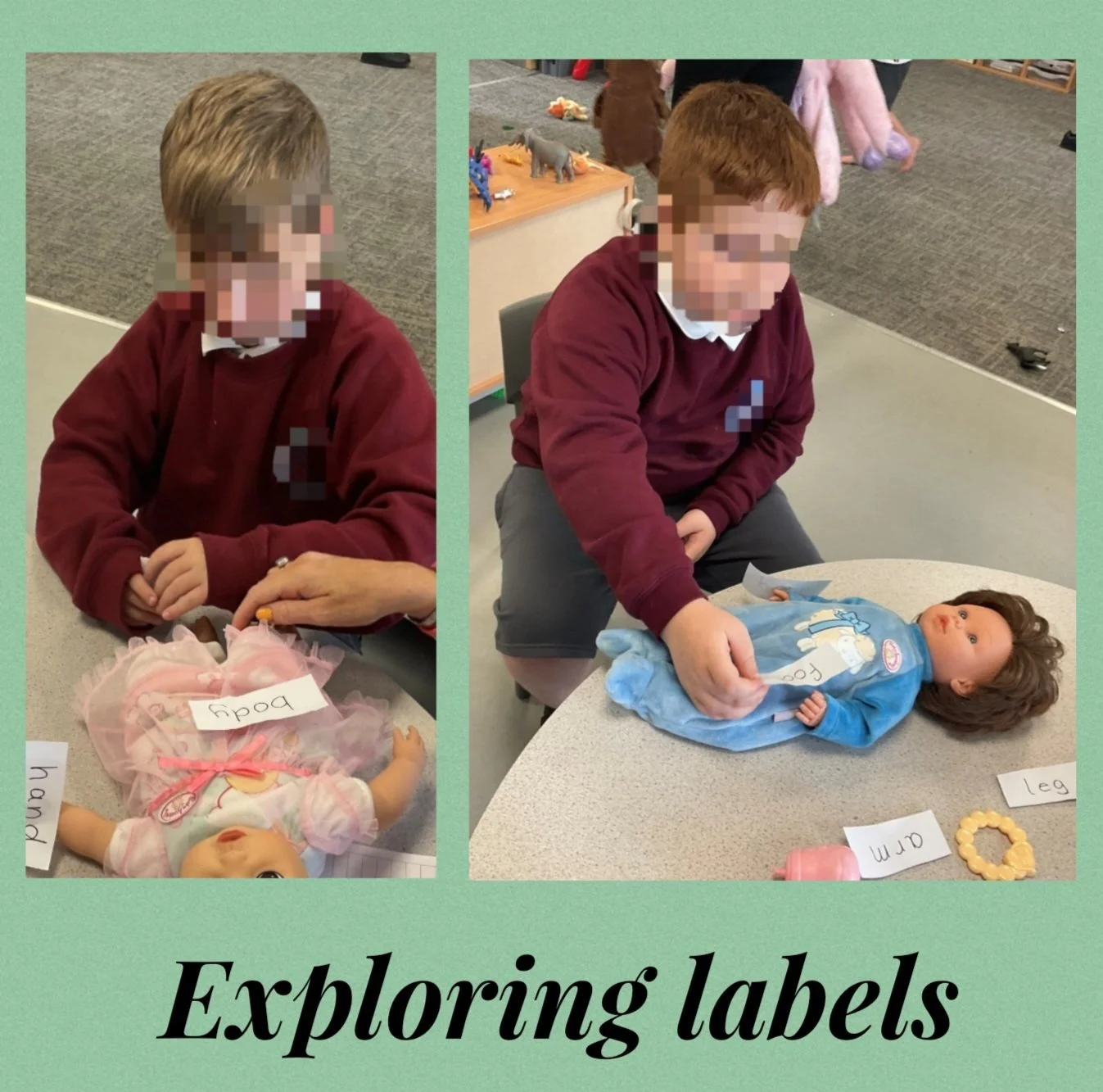
Having seen this progress in children and the different ways they display their learning, our approach to literacy has changed significantly over time. Initially, we attempted to replicate mainstream structures—phonics sessions, group inputs, and structured activities—while also trying to meet complex needs. This proved unsustainable and often ineffective. Now, our classroom is centred on a semi-formal curriculum. We prioritise engagement, flexibility, regulation, communication, relationships, and child-led learning. Group times are fluid, participation is encouraged but not forced, and learning is often embedded within play and individual or group special interests.
Rather than expecting children to come to learning, we bring learning to them—within the activities they are already engaged in. This shift has allowed us to see the “magic moments” of progress that were previously missed. Most importantly we are more dynamic in trying to explore more diverse ways of teaching and viewing what “literacy” really is.
Our Curriculum Approach to Literacy
We now use a combination of approaches, with EQUALS as our main literacy curriculum. It views literacy as a developmental, communication-led process, focusing on meaningful, functional skills and small, personalised steps of progress.
The Equals approach to literacy is based on the belief that communication is at the heart of learning, and that reading, writing, speaking and listening should be taught together rather than as separate skills. While it reflects the aims of the National Curriculum, it recognises that some pupils—particularly those with global learning difficulties—may not learn effectively through traditional approaches. Instead, Equals focuses on helping each learner make meaning in ways that work for them, placing strong emphasis on understanding, engagement and real-life communication. Teaching is often pupil-led and built around individual interests, which helps increase motivation, confidence and participation. Teachers act as partners in the learning process, adapting flexibly rather than following a fixed programme. Crucially, the approach accepts that not all pupils will become fluent readers, and instead prioritises functional literacy and alternative ways of communicating, ensuring that all learners can develop skills that are meaningful and useful in their everyday lives.
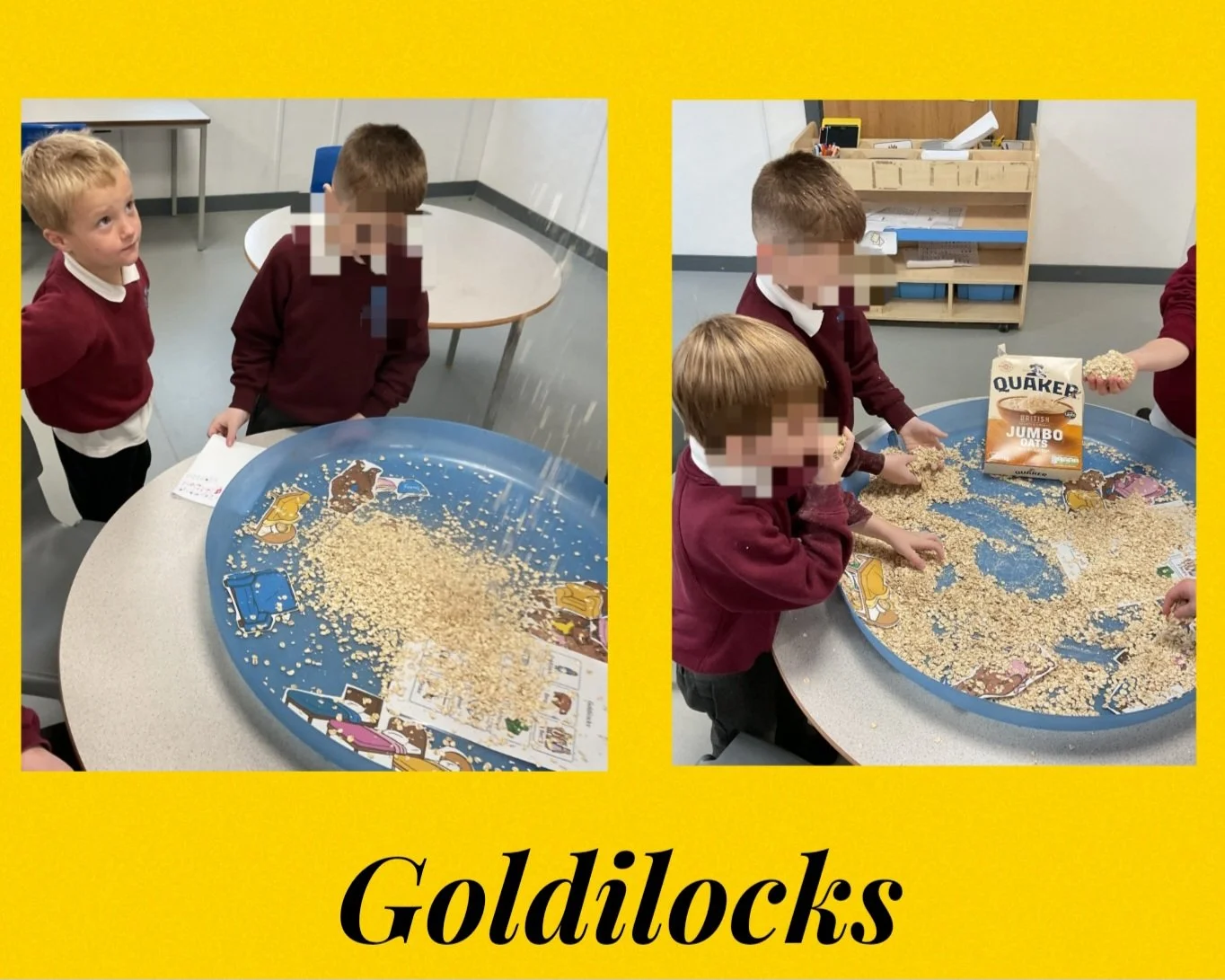
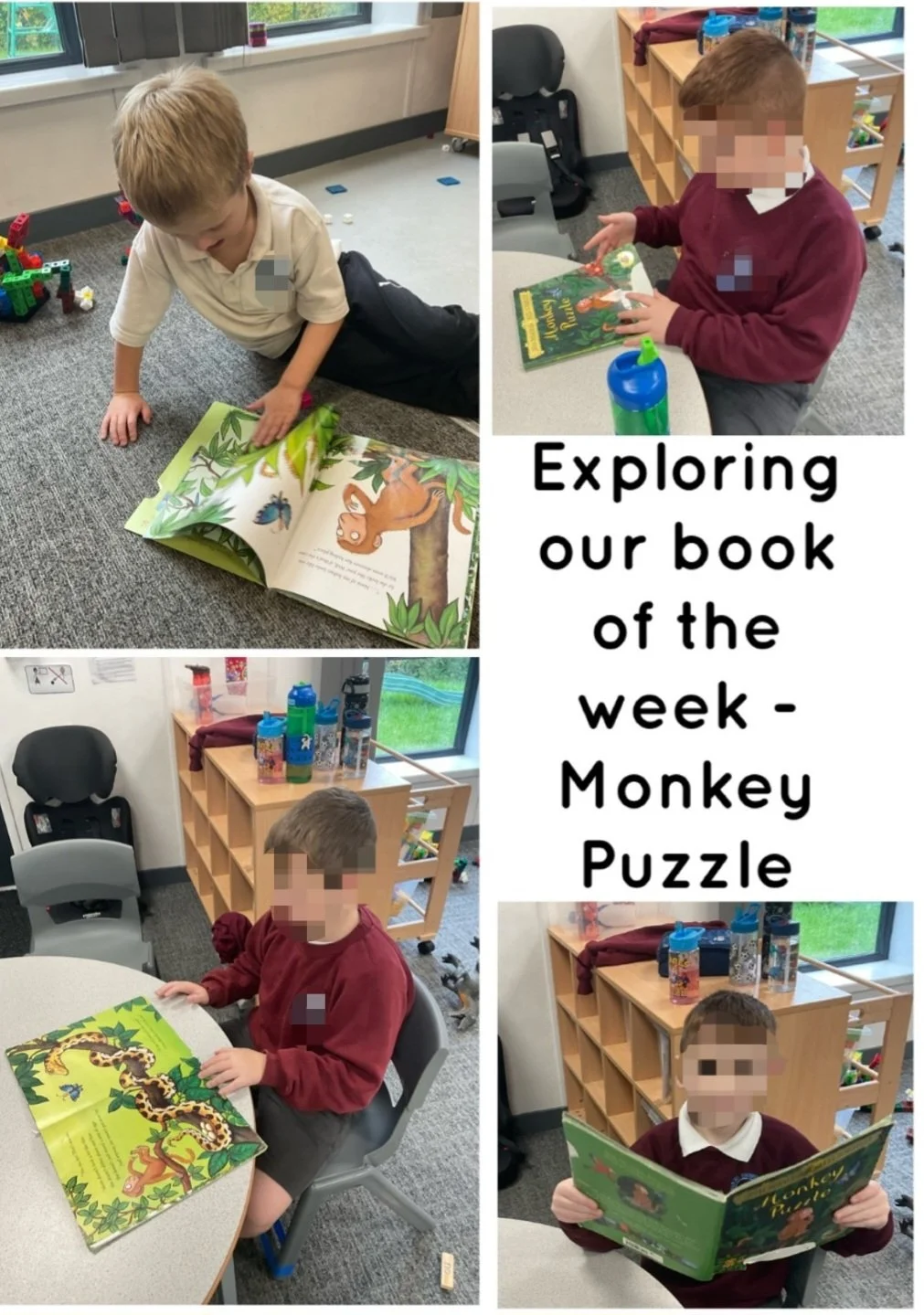
One of our other most effective changes has been to focus on a book a week and to choose books that have a song version on You Tube – perfect for our Gestalt Language Processors and our children who like to feel the music.
Each week we will have a focus story, a focus letter, a focus core word, alongside all of the traditional enhancements such as song times, Phase 1 phonics games, literacy themed Bucket Times, social stories, personalised phonics and sight reading books, a Tonie Box, use of AAC, looking at books with an adult, a variety of print within provision, and personalised phonics and sight reading planning. We have also had great success with The Sensory Classroom Core Word Programme.
We have also recently started using Predictable Writing Charts and Alternative Pencils and this has been amazing – with even our most bouncy children joining in with this error free style of learning.
Key Reflections
It has been quite a journey – and we are still learning (and always will be) – but now we strive for connection, not compliance, and we always presume competence in every learner. We are curious and inquisitive as we watch everything the children do – as we look for those glimpses of the underlying skills of literacy. We recognise that literacy may look very different for non-verbal children, and we approach phonics with flexibility, without expecting immediate or conventional responses and always with non-phonics approaches at other times of the day to allow for different learning styles.
We understand that progress is not always linear or immediately visible, and we have faith that what we are teaching is being heard and processed, even if evidence of this emerges much later or in unexpected ways. We look for signs of literacy in play, interaction, and everyday routines, and we remain open and adaptable in group learning situations, knowing that children may still be learning and absorbing information even when they are not directly participating.
Influences and Professional Learning
Our approach has been shaped by ongoing reading, training, and reflection and knowing that there will always be more to learn and different approaches to explore. Some of the resources we have found useful most recently, both in literacy and in a wider sense of understanding and connection include:
Teaching Reading to All Learners Including Those with Complex Needs: A Framework for Progression within an Inclusive Reading Curriculum, Dr Sarah Moseley (book)
The Scale of the Spectrum: Insight Into Autistic Experiences, Dr Joanna Grace (book)
Stories That Explain: social stories for children with autism in primary school, Lynn McCann (book)
Understanding Gestalt Language Processing, Ali Battye (Teach Us Too course)
Emergent Writing: Using Predictable Writing Charts and Alternative Pencils, Marion Stanton (Teach Us Too Course)
Reachout ASC courses and resources
Unite for Literacy Website – free eBooks for every special interest!
Catching Up with Sarah & Ginny, Dr Sarah Moseley & Ginny Bootman (podcast)