Understanding whether a learner is at the emergent or conventional stage of literacy is key to providing appropriate and effective instruction. This section will support professionals in recognising the characteristics of each stage, helping to determine where their learners are currently and how best to plan next steps in their literacy journey.
Emergent and conventional literacy describe different stages of literacy development. Emergent literacy refers to the early skills, knowledge, and behaviours that precede formal reading and writing — such as exploring books, recognising symbols, and understanding that print carries meaning. Conventional literacy involves the ability to read and write using standard rules and strategies, including decoding, spelling, composing text, and understanding what is read. Both stages are important and often overlap, especially for learners with complex needs.
The following steps will help you decide if your learners require emergent, transitional or conventional literacy interventions.
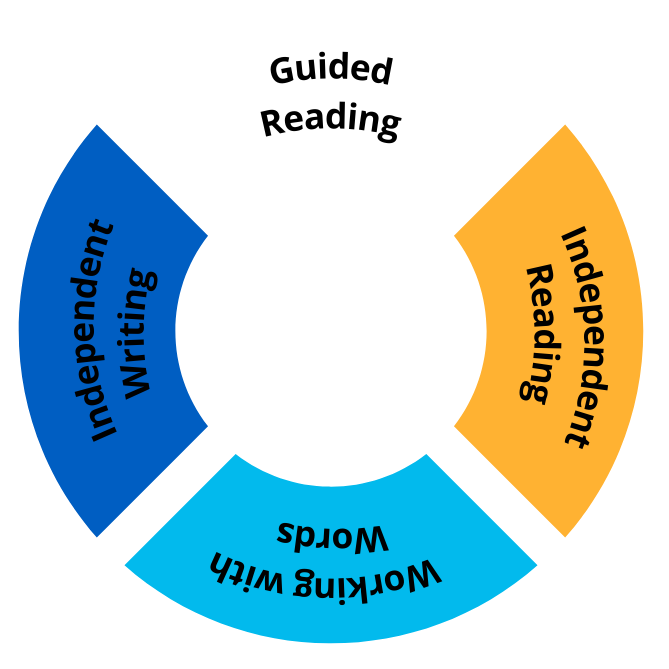
Answer the questions in the first box for the student you are working with. If you responded NO to any of these questions, you’ll implement the Daily Emergent Interventions. If you answered YES to all of the questions, you’ll implement the Daily Conventional Interventions as displayed above. Answering ‘yes’ to all of the above questions doesn’t necessarily mean that student is at a conventional literacy level but it does mean that they are ready to move to the conventional set of interventions. If you have a class of students at both the Emergent and Conventional levels, use the combination of interventions as described below:
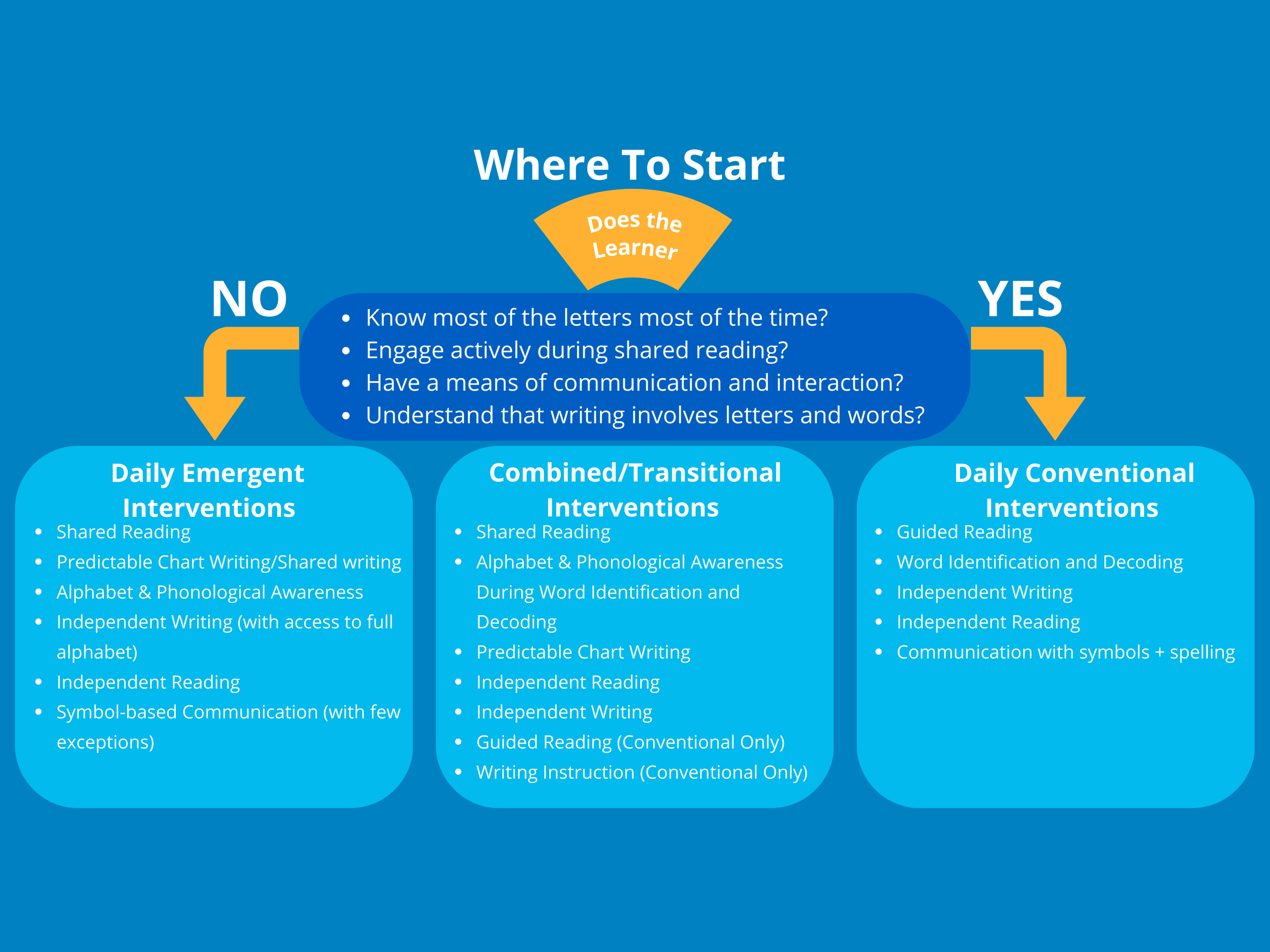
Adapted from Erickson & Koppenhaver, Literacy Instruction for All
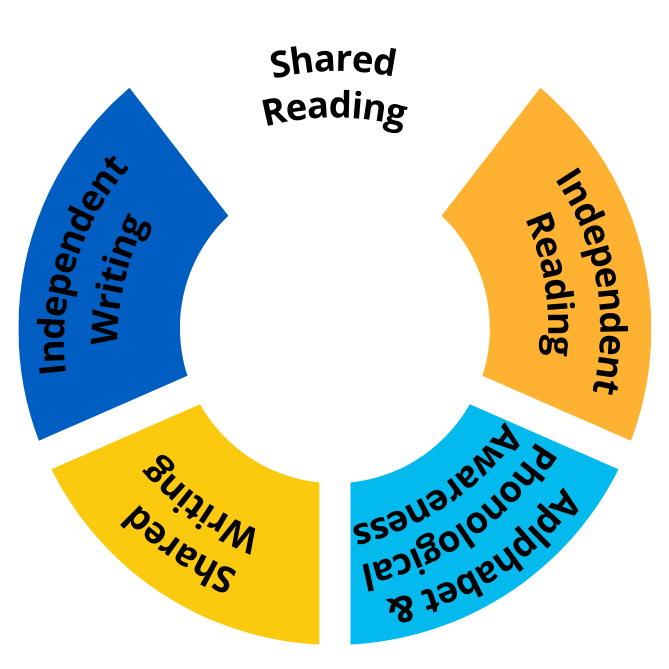
ELI: Alphabetic & Phonological Awareness